1. Introduction
Amphibia is a group of vertebrate animals that includes frogs, toads, salamanders, newts and caecilians. The word Amphibia comes from two Greek words: Amphi, meaning both, and Bios, meaning life. This name refers to their ability to live both in water and on land during different stages of their life.
Amphibians are cold-blooded (ectothermic) animals. They generally lay eggs in water or moist environments, and most undergo a remarkable transformation called metamorphosis, in which a young aquatic larva develops into an adult.
Amphibians are important components of ecosystems because they help control insect populations and serve as food for many other animals.
2. General Characteristics of Amphibia
1. Habitat
- Amphibians are mostly found in freshwater and moist terrestrial environments.
- They live in ponds, lakes, rivers, forests, wetlands and damp places.
- Some species live underground or on trees.
- They are generally absent from deserts and extremely cold regions, although some species can survive harsh conditions.
2. Body structure
- Their body is generally divided into head and trunk.
- Some amphibians, such as frogs, have no tail as adults.
- Salamanders and caecilians usually have elongated bodies.
- Most amphibians have two pairs of limbs.
- Caecilians are limbless amphibians.
3. Skin
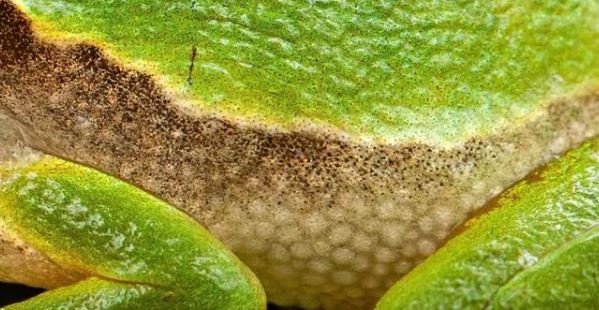
- Amphibians have thin, soft, moist and glandular skin.
- Their skin generally lacks scales, feathers and hair.
- Mucous glands keep the skin moist.
- Some amphibians have poison glands for protection.
- Their skin helps in respiration by absorbing oxygen.
4. Respiration
Amphibians use different respiratory organs during their life cycle.
- Gills: Larvae such as tadpoles generally breathe through gills.
- Lungs: Most adult frogs and toads breathe through lungs.
- Skin: Many amphibians perform cutaneous respiration through their moist skin.
- Buccopharyngeal cavity: Some amphibians exchange gases through the lining of the mouth and throat.
5. Circulatory system
- Amphibians have a closed circulatory system.
- Their heart generally consists of three chambers: two atria and one ventricle.
- They have two main circulatory circuits: pulmonary and systemic circulation.
- Their blood contains red blood cells with a nucleus.
6. Digestive system
- Amphibians have a complete digestive system.
- Their digestive tract includes the mouth, oesophagus, stomach, intestine and cloaca.
- Most adult frogs and toads are carnivorous.
- They feed on insects, worms, small fish and other small animals.
- Tadpoles of many species feed mainly on algae and plant material.
7. Excretion
- The kidneys are the main excretory organs.
- The excretory system removes nitrogenous waste from the body.
- Aquatic larvae commonly excrete ammonia, while many adult amphibians excrete urea.
- The cloaca receives waste from the digestive, urinary and reproductive systems.
8. Nervous system and sense organs
- Amphibians have a well-developed brain and spinal cord.
- Their eyes are generally well developed.
- Frogs have a tympanum that helps in hearing.
- They possess olfactory organs for detecting smells.
- Their sense organs help them find food, detect predators and locate mates.
9. Reproduction
- Amphibians reproduce sexually.
- Most species are oviparous, meaning they lay eggs.
- Fertilisation is usually external in frogs and toads.
- In many salamanders and caecilians, fertilisation is internal.
- Eggs generally lack a hard shell and are protected by a jelly-like covering.
10. Metamorphosis
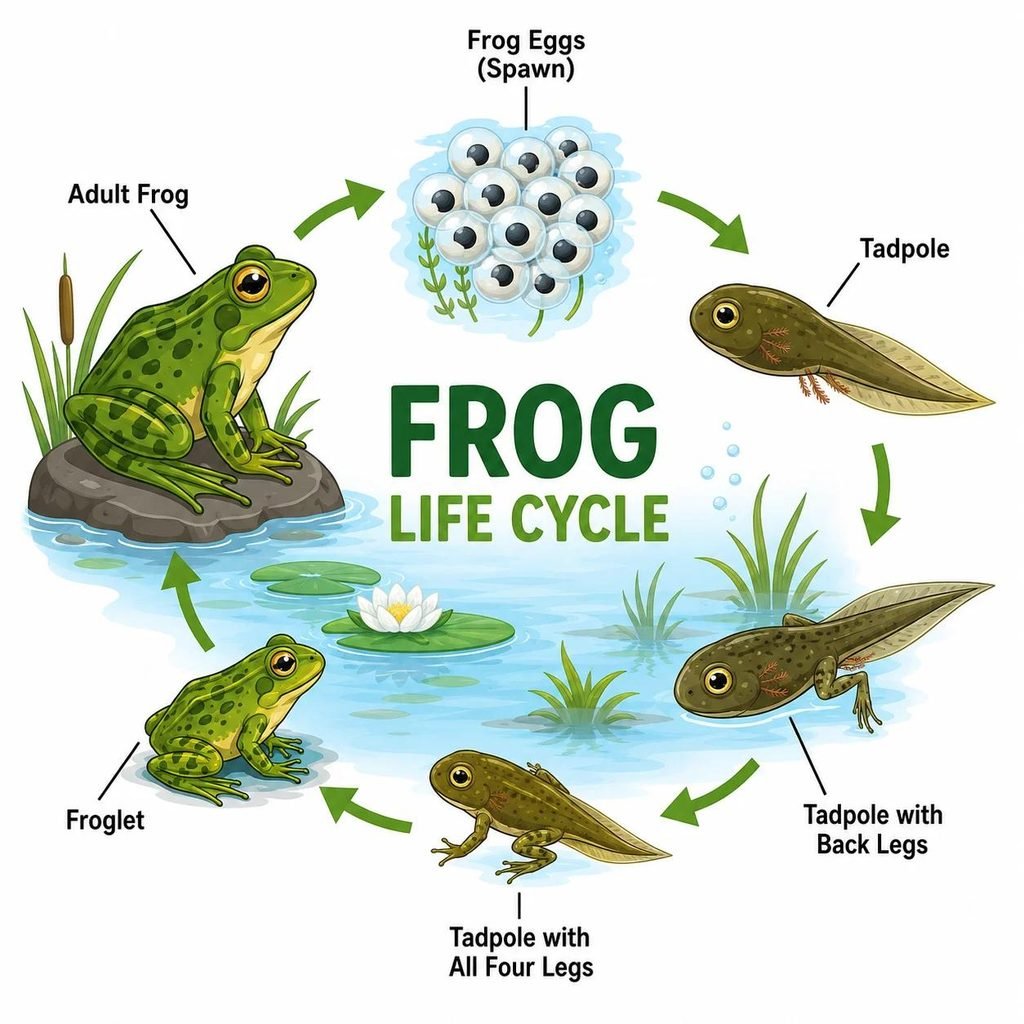
Metamorphosis is one of the most important characteristics of amphibians.
The life cycle of a typical frog includes:
- Egg: The female lays eggs in water.
- Tadpole: The egg hatches into an aquatic larva with a tail and gills.
- Developing tadpole: Hind limbs and then forelimbs develop.
- Froglet: The tail becomes smaller and lungs develop.
- Adult frog: The tail disappears, and the frog becomes adapted to life on land and in water.
3. Classification of Amphibia
Living amphibians are divided into three major groups or orders.
1. Order Anura (Salientia)
- Includes frogs and toads.
- Adults generally have no tail.
- Hind limbs are usually long and strong for jumping.
- Examples: Rana, Bufo.
2. Order Urodela (Caudata)
- Includes salamanders and newts.
- Adults generally possess a long tail.
- Their body is elongated.
- Most have two pairs of limbs.
- Examples: Salamandra, Triturus.
3. Order Apoda (Gymnophiona)
- Includes caecilians.
- They are limbless amphibians.
- Their body is long and cylindrical.
- They generally live underground in moist soil.
- Examples: Ichthyophis, Typhlonectes.
4. Amazing and Interesting Facts About Amphibians
1. Living fossils: Amphibians are among the oldest groups of land vertebrates. Their ancestors evolved from aquatic vertebrates hundreds of millions of years ago.
2. Skin breathing: Some amphibians can absorb oxygen directly through their skin. This is called cutaneous respiration.
3. Colourful poisonous frogs: Poison dart frogs have bright colours that warn predators about their toxic skin secretions.
4. Regeneration ability: Some salamanders can regrow lost limbs, tails and even parts of certain internal organs.
5. Transparent frogs: Glass frogs have partially transparent skin, allowing some internal organs to be seen through their bodies.
6. Frozen survival: Wood frogs can survive partial freezing during winter by using glucose and other protective substances in their bodies.
7. Amazing jumping ability: Some frogs can jump many times their own body length because of their powerful hind limbs.
8. Parental care: Certain amphibians protect their eggs and young. Some poison dart frogs carry tadpoles on their backs.
9. Axolotl neoteny: The Axolotl retains its larval characteristics, such as external gills, even when it becomes sexually mature.
10. Unique communication: Male frogs produce different calls to attract females, defend territories and communicate with other frogs.
11. Tongue-catching technique: Many frogs have long, sticky tongues that help them catch insects quickly.
12. Environmental indicators: Amphibians are considered important bioindicators because their sensitive skin and life cycles make them vulnerable to environmental pollution.
5. Economic and Ecological Importance of Amphibians
Amphibians play an important role in maintaining ecological balance.
- Insect control: Frogs and toads eat mosquitoes, flies and other insects.
- Food chain: They serve as food for snakes, birds, fish and mammals.
- Environmental indicators: Their presence or disappearance can indicate changes in environmental health.
- Scientific research: Frogs and salamanders are used in biological and developmental studies.
- Medical research: Some amphibian skin secretions contain compounds that are being investigated for possible medical applications.
- Biodiversity: They contribute to the biological diversity of forests, wetlands and freshwater ecosystems.
6. Threats and Conservation of Amphibians
Amphibians face several threats around the world.
- Destruction of forests and wetlands.
- Water and soil pollution.
- Climate change and increasing temperatures.
- Diseases such as chytridiomycosis caused by chytrid fungi.
- Invasive species and habitat fragmentation.
- Excessive collection and illegal wildlife trade.
Conservation measures:
- Protect forests, ponds and wetlands.
- Reduce the use of harmful pesticides.
- Prevent water pollution.
- Protect endangered amphibian species.
- Promote awareness about amphibian conservation.
- Support scientific research and captive-breeding programmes.
7. Conclusion
Amphibia is a fascinating class of vertebrate animals that shows an important evolutionary connection between aquatic and terrestrial life. Their moist skin, different respiratory organs, three-chambered heart, metamorphosis and diverse reproductive methods make them unique among vertebrates. Frogs, toads, salamanders, newts and caecilians play essential roles in maintaining ecological balance. Therefore, protecting amphibians and their natural habitats is very important for biodiversity and environmental health.
Important Questions and Answers
Q1. What is Amphibia?
Ans: Amphibia is a class of cold-blooded vertebrates that generally live both in water and on land.
Q2. Give two examples of amphibians.
Ans: Frog and salamander.
Q3. What is cutaneous respiration?
Ans: Respiration through the moist skin is called cutaneous respiration.
Q4. What is metamorphosis?
Ans: The transformation of a larva into an adult is called metamorphosis.
Q5. How many chambers are present in the heart of amphibians?
Ans: Generally three chambers.
Q6. Name the three orders of living amphibians.
Ans:
- Anura
- Urodela
- Apoda
Q7. Which amphibians are limbless?
Ans: Caecilians.
Q8. What are tadpoles?
Ans: Tadpoles are the aquatic larval stages of frogs and toads.
Q9. What type of blood cells are found in amphibians?
Ans: Nucleated red blood cells.
Q10. What is the nature of amphibian skin?
Ans: Thin, moist, soft and glandular.